Showing posts with label banner. Show all posts

Monday, January 01, 2018

Are You Looking for a Critique Group or Partner?

By Janice Hardy, @Janice_Hardy

It's Crit Time Again!

Back in 2013 I started a Yahoo Group called "Janice Hardy's Critique Connection" to help writers connect with like-minded folks looking for critique groups or partners. It was designed to help people find long-term, quality writing partners, not just places you can toss up your work and get quick feedback.

It went from a one-time thing to annually, and now to every six months (I open it up every January and July). If you're looking to join or create a group, add more to your existing group, or find a critique partner, odds are you'll find someone here.

Saturday, October 07, 2017

Day Seven: Idea to Novel Workshop: Developing Your Antagonist

By Janice Hardy, @Janice_Hardy

Welcome to Day Seven of Fiction University’s At-Home Workshop: Idea to Novel in 31 Days. The first twelve days will focus on developing the story and getting all the pieces in place so we can more easily plot the entire novel.

Today, we’re focusing on the antagonist.

Choose Your Antagonist


The shadowy mirror of the protagonist is the antagonist. The type of conflict used in the novel often determines who or what this is (and vice versa). If the conflict is against another person, then the protagonist will need a worthy adversary. If the antagonist is nature or society, then the protagonist will be fighting against obstacles larger than herself. If the protagonist is her own worst enemy, then the antagonist will be someone who represents all that the protagonist is fighting.

Friday, October 06, 2017

Day Six: Idea to Novel Workshop: Creating the Novel's Conflict

By Janice Hardy, @Janice_Hardy

Welcome to Day Six of Fiction University’s At-Home Workshop: Idea to Novel in 31 Days. The first twelve days will focus on developing the story and getting all the pieces in place so we can more easily plot the entire novel.

Today, we’re looking at your novel’s conflict in preparation for developing the antagonist. This might seem a little backward, but if you’re sure what type of conflict you have, it’s a lot harder to know who the bad guy is.

Choose a Conflict Type


Conflict is vital to any novel, but it isn’t always between people. Some novels pit the protagonist against society or a natural disaster. Others have the traditional protagonist vs. antagonist setup, or protagonist vs. protagonist. Let’s look at the four classic conflict types, how they define the basic conflict structure, and how they affect the antagonist.

Thursday, October 05, 2017

Writers Are Competitive

By Dario Ciriello

Part of the Indie Authors series


A chance comment by a friend on Facebook today got me thinking on the 2011 Woody Allen film, Midnight in Paris. If you’ve seen the movie, you’ll surely remember the wonderful scene in which Hemingway’s character tells the protagonist, a young writer transported back in time,that “writers are competitive.” (For those of you’ve not seen this gem, I’ve linked the scene here.)

My friend, who had just joined a writers-helping-writers group on Facebook, wrote, “It has been a while since I've read entry level stuff.”

Day Five: Idea to Novel Workshop: Developing Your Protagonist

By Janice Hardy, @Janice_Hardy

Welcome to Day Five of Fiction University’s At-Home Workshop: Idea to Novel in 31 Days. The first twelve days will focus on developing the story and getting all the pieces in place so we can more easily plot the entire novel.

Today, it’s all about the protagonist.

Choose Your Protagonist


The protagonist is the person driving the plot. In most cases she (or he) is the main character, and the plot will focus on her resolving the novel’s core conflict (the problem at the center of the novel).

Sunday, October 01, 2017

Get Ready for NaNo! At-Home Workshop: Idea to Novel in 31 Days

By Janice Hardy, @Janice_Hardy

Welcome to the home page of my at-home workshop, Idea to Novel in 31 Days. While this workshop is aimed at writers who plan to do NaNo next month (National Novel Writing Month), it’s just as useful for anyone who wants a little guidance and motivation to develop a novel. Just like my at-home revision workshop, this is a work-at-your-own-pace kind of deal. Take as much time as you need per step.

This workshop is based on my book, Plotting Your Novel: Ideas and Structure. It's the Cliff Notes version, and gives a taste of what the book covers.

Plotting Your Novel has considerably more information, examples, brainstorming questions, and novel options to help you develop your novel, so if you enjoy the information and format here, I highly recommend getting the book. It's 300 pages of helpful information and guides, broken into easy-to-follow workshops that focus on the individual things to consider when creating a novel or a novel series.

Some of you might even want to pick up the book and/or the Plotting Your Novel Workbook, and follow along with it at home. You’ll get a lot more educational information than what’s here (there’s only so much I can do in a single daily article).

Workshop Steps By Day

Day One: Idea to Novel Workshop: Brainstorm Your Idea
Day Two: Idea to Novel Workshop: Develop Your Hook 
Day Three: Idea to Novel Workshop: What's Driving Your Plot? 
Day Four: Idea to Novel Workshop: Creating Your Characters
Day Five: Idea to Novel Workshop: Developing Your Protagonist
Day Six: Idea to Novel Workshop: Creating the Novel's Conflict
Day Seven: Idea to Novel Workshop: Developing Your Antagonist
Day Eight: Idea to Novel Workshop: Developing the Character Arcs
Day Nine: Idea to Novel Workshop: Choosing a Point of View Style
Day Ten: Idea to Novel Workshop: Choosing Your Point-of-View Characters
Day Eleven: Idea to Novel Workshop: Finding Your Theme
Day Twelve: Idea to Novel Workshop: Choosing Your Setting
Day Thirteen: Idea to Novel Workshop: Determining Your Goals
Day Fourteen: Idea to Novel Workshop: Discovering Your External Conflicts
Day Fifteen: Idea to Novel Workshop: Discovering Your Internal Conflicts
Day Sixteen: Idea to Novel Workshop: Finding Your Stakes
Day Seventeen: Idea to Novel Workshop: Turning Your Idea into a Summary Line
Day Eighteen: Idea to Novel Workshop: Turning the Summary Line Into a Summary Blurb
Day Nineteen: Idea to Novel Workshop: Create the Most Basic of Outlines
Day Twenty: Idea to Novel Workshop: Developing Your Plot
Day Twenty-One: Idea to Novel Workshop: The Opening Scene
Day Twenty-Two: Idea to Novel Workshop: The Inciting Event
Day Twenty-Three: Idea to Novel Workshop: The Act One Problem
Day Twenty-Four: Idea to Novel Workshop: Act Two Choice
Day Twenty-Five: Idea to Novel Workshop: The Midpoint Reversal
Day Twenty-Six: Idea to Novel Workshop: The Act Two Disaster 
Day Twenty-Seven: Idea to Novel Workshop: The Act Three Plan
Day Twenty-Eight: Idea to Novel Workshop: The Climax
Day Twenty-Nine: Idea to Novel Workshop: The Wrap Up
Day Thirty: Idea to Novel Workshop: Summarize Your Novel
Day Thirty-One: Idea to Novel Workshop: Prepare to Write!

How This Works


Every day in October I'll focus on one step of developing a novel and provide tasks for writers to complete. The plan is to complete one step a day, but we all know novels have minds of their own and don’t always stick to a schedule, so don’t worry if some steps require more time than others. Depending on the novel and the writer, some steps will be easy, while others will take longer than a single day.

This might be a 31-day program, but take as much time as you need and don’t feel pressured to keep up if that will hurt or hinder your process. These steps are intended to guide you if you’re not sure where to start, motivate you on those days when writing is tough, and encourage you to keep writing by breaking the process into manageable pieces. It’ll still be on the site when you’re ready to move on to the next step, even if that’s months from now.

What You’ll Need


An idea, even if it’s rough. This workshop is aimed at writers who already know basically what they want to write about (though the book itself offers more on finding ideas). The goal is to take that idea and develop the characters, setting, conflicts, and plot so you can dive in come November 1 and write like wind to hit your 50,000 words.

A Peek at the Process


The workshop will focus on the elements of the story first, then move on to the specifics of plotting. You’ll flesh out your idea, create your characters, develop your setting, and get a general sense of goals, conflicts, and stakes before digging into the more specific plotting and structure turning points. It’s all about getting the story solid, then figuring out the best way to tell that story. This workshop is intended to motivate and guide you, not heap more stress on you, so don’t feel you have to answer every question or do every exercise if you don’t want to.

Who’s ready to plan their novel? 

For more help on plotting or writing a novel check out my Plotting Your Novel: Ideas and Structure.

Go step-by-step through plotting and writing a novel. Learn how to find and develop ideas, brainstorm stories from that first spark of inspiration, develop the right characters, setting, plots and subplots, as well as teach you how to identify where your novel fits in the market, and if your idea has what it takes to be a series.

With clear and easy-to-understand examples, Plotting Your Novel: Ideas and Structure offers ten self-guided workshops with more than 100 different exercises to help you craft a solid novel. Learn how to:
  • Create compelling characters readers will love
  • Choose the right point of view for your story
  • Determine the conflicts that will drive your plot (and hook readers!)
  • Find the best writing process for your writing style
  • Create a solid plot from the spark of your idea
Plotting Your Novel: Ideas and Structure also helps you develop the critical elements for submitting and selling your novel once it’s finished. You’ll find exercises on how to:
  • Craft your one-sentence pitch
  • Create your summary hook blurb
  • Develop a solid working synopsis And so much more!
Plotting Your Novel: Ideas and Structure is an easy-to-follow guide to writing your novel or fixing a novel that isn’t quite working. 

Available in paperback and ebook formats.
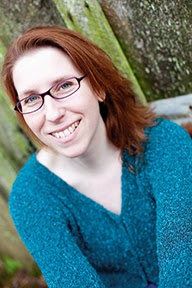
Janice Hardy is the award-winning author of the teen fantasy trilogy The Healing Wars, including The Shifter, Blue Fire, and Darkfall from Balzer+Bray/Harper Collins. The Shifter, was chosen for the 2014 list of "Ten Books All Young Georgians Should Read" from the Georgia Center for the Book.

She also writes the Grace Harper urban fantasy series for adults under the name, J.T. Hardy.

When she's not writing novels, she's teaching other writers how to improve their craft. She's the founder of Fiction University and has written multiple books on writing.
Website | Facebook | Twitter | Pinterest | Goodreads | Amazon | Barnes & Noble | iTunes | Indie Bound

Thursday, September 28, 2017

Producing Your Books in Audio Part Five: Proofing Your Book

By Angela Quarles, @AngelaQuarles

Part of the Indie Author Series


This month, I'm continuing my series on producing books in audio with ACX. Last month, I covered Producing Your Books in Audio Part Four: Prepping Your Book. This month I'll give tips on what to do when your narrator is done recording.

Tip #1 -- Evaluating the first 15 minutes


This is the 'speak now or forever hold your peace' kind of moment. Your narrator will send you the first 15 minutes, and you need to listen to it (preferably with headphones) and let them know any big pic issues you have at this point. Hopefully you've done your homework and picked a narrator who fits your story, but this is another checkpoint. Things to listen for and mention:
  • Pacing -- are they reading at a comfortable pace? You don't want them reading it soooo sloooowly that it drags. But you also don't want them rushing the story.
  • Characterization -- are they properly embodying the characters and their personalities? Especially your main characters?
  • Tone -- are they reading your story with the right tone? Playful when it should be playful? Suspenseful when it should be suspenseful?
  • Accents and pronunciation -- are there any accents that are off? Are words pronounced properly?
Don't worry about sound quality, as these aren't mastered, but if you do notice excessive mouth noises and pops, just touch base with your narrator to make sure those aren't going to be an issue when all's said and done.

Thursday, September 21, 2017

Safeguarding Your Livelihood

By Jana Oliver, @crazyauthorgirl

Part of the Indie Authors Series


If writing is your business, protect more than just your words. 

It seems this fall has been one of considerable personal challenges, not only for indie authors but just about everyone in the U.S. (and elsewhere). If you live in the Pacific Northwest or the Southwest, you’re fighting fires. If you’re in the Caribbean, Texas, Florida and Gulf States, you’ve got multiple hurricanes to contend with. In short, it’s been a nasty time for a lot of people.

Though my situation is nothing like those mentioned above—a self-imposed house sale and a move out of the country—there are similarities in the preparation required to keep my business on track. Because no matter how creative we are, it all comes down to keeping our work safe.

Thursday, September 14, 2017

Are Your Book’s Ads Earning or Losing You Money?

By Marcy Kennedy, @MarcyKennedy

Part of the Indie Author Series


A couple of months ago, I started a series on advertising as an indie author. We’ve already looked at a big picture overview of when and what we might want to advertise, and last month we talked about whether there’s ever a time when it’s okay to lose money on advertising.

From this point on, we’ll be looking at advertising where we earn back at least as much money as we invested in the ad. But there’s something we need to do before we can go any further talking about ads. We have to figure out how to measure whether our ads are earning us money or not. It’s fine to say we want them to earn us money, and another thing entirely to know how to tell if they are. That’s what I’m going to walk you through this month and next month.

Tuesday, September 12, 2017

6 Ways to Make Readers Fall in Love With Your Characters

By Laurence MacNaughton, @LMacNaughton

Part of the How They Do It Series (Contributing Author)

 
When readers care deeply about your characters, they can lose themselves completely in your writing. But that story magic doesn't happen by accident. There are six specific techniques you can use to make readers fall in love with your characters.

The key is empathy. When readers develop enough empathy for your characters, they start to actually feel what your characters are feeling. The story becomes a shared experience. Coincidentally, the word “shared” makes a perfect acronym for these six empathy-building techniques:

Thursday, September 07, 2017

What Makes an Indie Novel a Success?

By Dario Ciriello

Part of the Indie Authors Series


The roads to success in both indie and traditional publishing seem limited.

All things being equal, I see four principal ways in which an indie book can be a success:

1. You painstakingly build your fan base, always staying within one genre, possibly writing series works, and releasing books frequently and predictably. Somewhere after book three or four, maybe, things take off.

Wednesday, August 30, 2017

3 Steps to Building Your Story World

By Janice Hardy, @Janice_Hardy

World building is a part of every novel, even if there isn't much to do to create that world. 

Novels set in the present day in known cities don't need as much work to convey the setting, and a skilled writer can bring a familiar city to life in new and exciting ways. Historical writers can take years researching their settings to get the world right, and make their readers feel as though they've stepped back in time. Novels set in fantasy or created worlds design them from the ground up, envisioning the past, present, and even the future of those worlds.

For many writers, creating the world is half the fun of writing the novel. It's also half the work (if not more).

Friday, August 25, 2017

You Want to Write Fiction. So Where Do You Start?

By Janice Hardy, @Janice_Hardy
 
This week's Refresher Friday takes a heavily updated look at places to start when you're just starting out as a writer. Enjoy!

It's probably no surprise to anyone visiting this site that a lot of people want to write fiction. Some know exactly where to start and even have detailed story ideas in their heads, but others are a bit lost as to where to begin. With all the information about writing out there, it can be pretty overwhelming (and confusing) for someone who wants to write, but hasn't taken those first steps on their writing journey yet. If you want to write, what do you do?

That first step is easy. Just start writing.

Thursday, August 24, 2017

Producing Your Books in Audio Part Four: Prepping Your Book

By Angela Quarles, @AngelaQuarles

Part of the Indie Author Series


Previous posts in this series covered whether you should produce an audio book, holding auditions, and picking a narrator. So for this post, I'm going to step you through some advice for what to do with your book before you turn it in to your narrator!


Tip # 1 - Make sure you have it in your final form


This sounds obvious, but I have heard of authors making changes to their book after they've had their book recorded. So unless you want to pay for your narrator to redo those parts, your audio version will not match if you make changes to your ebook. I've found that little errors pop up right after my ebook releases, so I wait until I know I've got all the nitpicky stuff out of the way.

Wednesday, August 23, 2017

Is Your Novel Exploring an Idea or Solving a Problem?

By Janice Hardy, @Janice_Hardy

I have a file on my computer devoted to story ideas. Last count, I had around forty of them in various stages of development. Some are just titles, some are query blurbs, and others are multi-page summaries. Nearly all of them have one thing in common—they’re only exploring ideas.

Which is why they aren’t books yet.

The ideas that I did turn into books were all ideas that posed a problem the protagonist had to solve. They were stories, not just a cool premise.

Monday, August 21, 2017

How to Use Your Word Count to Your Advantage

By Janice Hardy, @Janice_Hardy 

Quite often, word counts are associated with dread. "Oh no, I have to cut words," or "My manuscript is too short for the market I want to write for." We might even stress over a chapter that's gotten too big (or too small). 

It makes sense, since what we can measure is what usually gets measured, and word count is the easiest thing to measure in a manuscript. It's how we judge the hard to judge.

Which is a bit unfair to the poor word count, because it's actually a very handy tool to use when writing. The number of words we have can help us judge our pacing and structure. I even use my word count to help me write my scenes.

Thursday, August 17, 2017

Backmatter: Are You Making the Most of Your Digital Shelf Space?

By Courtney Milan, @courtneymilan

Part of the Indie Author Series


JH: Jana Oliver is taking a break this month, so let's dip into the archives for a very important aspect of self publishing many authors overlook. Their novel's backmatter.

When I first decided to start self-publishing, I thought the major sticking points for returning to a contract were royalty rates and the price points for digital books. That was pure naivety—I didn’t realize that I was doing something wrong, something fundamental, and that once I fixed it, it would change how I think of digital sales.

Before I start telling you about backmatter, I have to tell you how I think about digital sales. In the world of print, much depends on your shelving. If you’re at the front of the store, you’re going to sell more copies than if you’re stuffed on the back of the shelves. Stores decide what books to put at the front on the basis of a handful of factors: what the publisher’s willing to pay for the experience, how titles from that author have sold in the past, and other factors. In general, though, the performance of prior books by an author determines the initial placement of the next book.

Wednesday, August 16, 2017

Birth of a Book Part Ten: The Writing Stage: Writing the First Draft

By Janice Hardy, @Janice_Hardy

Part of the Early Stages of a Novel Series


This series has been discussing the early stages of writing a novel. We started with the Stage One: the Idea Stage, beginning with the Inspirational Spark, moving on to Brainstorming the Idea, Clarifying the Idea, and wrapping it up with Testing the idea. Next, we entered Stage Two: Development, which got us looking at ways to create characters, and then further develop those characters. We then shifted to setting and world building, then we focused on figuring out the plot, and wrapped up Stage Two with summarizing the story. Today, we finish the series with Stage Three, writing the first draft.

Since a large chunk of this site is dedicated to the specifics of how to write a first draft, I’m going to step back and and approach this a little differently this time. No matter how much I wish I could list out the exact steps you need to write a killer first draft, no such thing exists. Every writer has their own way of writing, and as comforting as that is, it’s also a bit terrifying—because there’s no one “right way” we can follow.

Monday, August 14, 2017

Happy Release Day! Understanding Conflict (And What It Really Means) Is Out!

By Janice Hardy, @Janice_Hardy

I’m so excited to announce my newest book in the Skill Builders series, Understanding Conflict (And What It Really Means), officially releases today.

Understanding Conflict
follows the same in-depth study of conflict that I did in my Understanding Show, Don’t Tell book. It looks at the various aspects of conflict, what affects conflict, and some common problems and misconceptions found with conflict—with plenty of examples.

It’s available in paperback and ebook formats at these retailers:

Paperback: Amazon | Barnes & Noble | Indie Bound

Ebook: Amazon | Barnes & Noble | iTunes | Kobo | Inktera | Chapters/!ndio

And a quick note…all of my writing books are now available at Amazon, Barnes & Noble, iTunes, Books-A-Million, Chapters/!ndio, Kobo, Inktera, and various indie booksellers.

For a sneak peek, head over to Mystery Writing Is Murder for my guest post on What Conflict Really Means. Over the next month, I’ll be stopping by some of my favorite writing blogs to chat about conflict. I’ll let you know where and when!

Until then, here’s the book’s blurb:

Do you struggle with creating conflict in your novel? You don't have to.

Janice Hardy, award-winning author and founder of the popular writing site, Fiction University, takes you deep inside one of the most important aspects of storytelling--conflict. She'll help you understand what conflict really is, discuss the various aspects of conflict, and reveal why common advice on creating conflict doesn't always work.

With in-depth analysis and easy-to-understand examples, Understanding Conflict (And What It Really Means) looks at how to develop and create conflict in your novel. It also explores the things that affect conflict (such as tension), and the misconceptions that confuse and frustrate so many writers.

This book will help you:
  • Understand what conflict means and how to use it
  • Tell the difference between external and internal conflicts
  • See why conflict isn't a "one size fits all" solution
  • Determine the type of conflict your story needs
  • Fix lackluster scenes holding your writing back

Understanding Conflict (And What It Really Means) is more than just advice on what to do and what not to do—it’s a down and dirty road map to how conflict works, designed to help you create the right conflict for whatever genre you're writing. By the end of this book, you’ll have a solid understanding of what conflict means and the ability to use it to craft strong and compelling fiction.

Paperback: Amazon | Barnes & Noble | Indie Bound

Ebook: Amazon | Barnes & Noble | iTunes | Kobo | Inktera | Chapters/!ndio

Friday, August 11, 2017

How to Create Conflict in Your Novel

By Janice Hardy, @Janice_Hardy

Without conflict, you have no story.

Ideas are easy to come up with, but it's not always easy to know what to do once we have them. The tough part is figuring out how to turn those great ideas into a story and then a plot. Conflict is often the key to that, since figuring out where the struggle lies also tells you who has the most to lose and who might be in opposition.

Back when I was first brainstorming The Shifter, I knew that I wanted to play with the idea of healing, and I wanted to give healing consequences. I'd never seen healing portrayed in a negative light, and I figured there was a bad side to everything, so why not healing? I thought it would be fun to explore the downsides of something so inherently good. It was the seed of the idea, but I was nowhere ready to write the novel with just that. I didn't have the conflict.