

There was a lot of chatter about the violence in Mockingjay, the final book of Suzanne Collins's YA blockbuster The Hunger Games series. I paid attention because at that time, I had just finished my own struggle with how to portray a realistic war in my The Healing Wars trilogy. The challenge was to be authentic, but not make it so horrific I'd freak out my younger or more sensitive readers. Or bore those who aren't so sensitive. Every reader has a different tolerance level for violence.
The Healing Wars Saga ends, as the title says, with a war. As a storyteller, I wanted the war to feel real, and carry all the emotional weight a young girl experiencing this (again) would have. The "wars" in Nya's life have shaped her as a person. Skimping on that in the end would have been wrong.
However, it was a middle grade novel, with readers as young as eight years old. Being too realistic might scare them, and I certainly didn't want to give my readers nightmares.
But not addressing that issue rang false. Readers would point fingers and slap me around. They'd know I was shirking my duty as a storyteller, because for three books I'd been building up to that war. If it was too easy or over too fast, they'd feel cheated. Readers wanted to see how Nya dealt with it. What plan she'd come up with to make it all okay, like she always did. (and how that plan will screw up other things in the process, like she always did)
I did what I've always done. This was Nya's story, and she saw the world with Nya-vision. I approached the war from what Nya felt was important and what she experienced. Instead of going personal to broad (which is what I'd done up til then with the series, as Nya's world view expanded and the bigger picture unfolded) I went broad to personal. Nya is drawn more and more into that final war, and it becomes more and more personal for her as the final book unfolds. It's not just a concept. It's not just her past. The broad ideas of war become very, very real in personal ways.
I tried to show the horrors of war without being horrific, because they're Nya's horrors. She's lived with violence for a long time, so it doesn't affect her the same. I don't think the violence is gratuitous, because it's there to evoke certain emotions from my characters. It's not just there for the sake of showing the "truth" of war.
And since Nya is a bit of an optimist, there is beauty in the midst of all that horror.
Finding the balance between truth and horror can be hard, and not just because we want to respect those who might be put off by violence. Page after page of war is, quite honestly, boring as snot. From a purely plotting standpoint, books need more or the story falls on its face.
What can you do if you're working on a story that requires a lot of violence in it?
1. Don't just describe the violence.
Just like page after page of setting description, battle after battle or fight after fight gets boring--especially if you're in a detached POV looking down at the battle from afar. Find the personal story in that battle to humanize (or elvinize, or whatever you race may be) the fight.
Capture the emotions of that battle. The fear, the anger, the disgust, even the joy of victory. The violence is there to serve a greater purpose, so let that purpose shine through.
(Here's more on writing description)
2. Provide stakes that are more than just death.
Readers know you're not going to kill off your main characters, so unless you plan to actually kill some off (Joss Wheadon is a master at this), the threat of death won't be as tense as you'd expect. One of the most common complaints I hear about first person, is that readers know the narrator won't die. And killing off minor characters that no one cares about doesn't make readers worry more about the main characters. We know spear carriers when we see them, those ensign red shirts that are there to be cannon fodder.
Add stakes that have deeper meaning to your characters, and let them be things that can actually go wrong and happen in that battle. Let the deaths be symbolic, like the death of a belief, or something the protagonist held sacred. It might be the death of innocence or a cherish time in someone's life. Look for what can be lost that matters a great deal to your characters.
(Here's more on knowing where to raise the stakes)
3. Mix up the pacing.
Too much fighting can wear a reader down. Pacing is critical in battles, because you don't want to numb the reader to your exciting scenes. Throw in some quiet moments, some slower times to balance the fighting. Leave readers breathless, but give them times to catch their breath as well.
Escalation is a handy tool to help with your pacing here. Think of your plot like a wave, with each wave having highs and lows, and each of those highs (and sometimes the lows) getting stronger with every wave. Let the situation get bigger, more personal, more dangerous, more romantic, more of whatever it is you're building toward.
(Here's more on understanding the right pace for your novel)
Stories are personal, so when we have to get violent it gets tough. But if we remember why readers read in the first place, we can find that personal touch that not only puts the reader in the story, but makes them understand why things might need to get a little rough from time to time. It also helps us know when we're using violence as a storytelling tool, or just for shock value.
How do you feel about violence in novels?

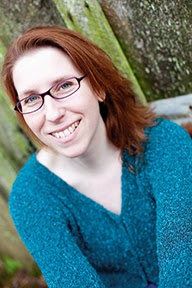 Janice
Hardy is the founder of Fiction University, and the author of the
teen fantasy trilogy The Healing Wars, where she tapped into her own
dark side to create a world where healing was dangerous, and those
with the best intentions often made the worst choices. Her novels
include The Shifter, (Picked as one of the 10 Books All Young Georgians Should Read, 2014) Blue Fire, and Darkfall from Balzer+Bray/Harper Collins. The first book in her Foundations of Fiction series, Planning Your Novel: Ideas and Structure is out now.
Janice
Hardy is the founder of Fiction University, and the author of the
teen fantasy trilogy The Healing Wars, where she tapped into her own
dark side to create a world where healing was dangerous, and those
with the best intentions often made the worst choices. Her novels
include The Shifter, (Picked as one of the 10 Books All Young Georgians Should Read, 2014) Blue Fire, and Darkfall from Balzer+Bray/Harper Collins. The first book in her Foundations of Fiction series, Planning Your Novel: Ideas and Structure is out now.Website | Facebook | Twitter | Goodreads | Amazon | Barnes & Noble | iTunes | Indie Bound

Totally agree with you! When a battle or hard scene is skimmed over I feel cheated and the story loses some heart with me. For the rest of the novel in fact, not just the one part. Being cheated sticks with you and can taint the rest of the experience.
ReplyDeleteBut it's a huge balancing act with violence and young readers. I still have a lot of trouble with it. But it sounds like you understand it perfectly!
Great post! Love the title.
Those are great points. I'm trying to design my writing so that children's parents, if they object to my writing, object to it for themes and content in themselves and not because I didn't handle them tactfully.
ReplyDeleteI won't name names, but there's one YA urban fantasy series that has a sociopathic major character. The way he's written, I feel like the writer's saying "Isn't he so cool?!" My response: I'll just head over there and hope I don't meet you in person, ma'm.
Yes, I sometimes write sociopaths. But I also hope I handle them in a way that makes it obvious that they're folks you wouldn't want to meet even on a brightly-lit day in a crowded street.
I actually have an novel planned where the first person narrator will die—I even already know how I'll likely phrase it—but her story… Well, it's disturbing at best, and her own unfortunate history continues to haunt her daughter for years afterwards. It's a planned quartet, with a different narrator for each one. (No, they don't all die, and their time periods won't overlap.)
*squints* I'm sorry if this isn't entirely coherent. I've had the flu for the past 5 days (not a typo) and can't sit up for long thanks to stomach cramps, so I've had to type this up in a few sittings.
I agree with C.E. If a death of a character or violence doesn't seem authentic to the narrative, I feel not only cheated, but less likely to return to read more by the same author.
ReplyDeleteI've been struggling with how much violence to include in my WIP. This post has given me lots to think about. Thanks!
Great advice! I don't know if I'll ever write a war story, but I'll remember this post. And you're so right about how war can be boring. LOTR got a little boring for me in places because of all the war and fight scenes. Can't wait to read Shifter 3 and see how you've dealt with it all.
ReplyDeleteReally great advice! My current project is also about a war, so I've spent a lot of time agonizing over how to portray it accurately without alienating readers. I especially liked your second point--stakes that are more than just death. Very interesting!
ReplyDeleteThank you!
Good points to remember. I don't have a war going on in my YA WIP, but there will be fighting going on and a battle near the end that decides the outcome of a divided kingdom and the fate of the MC and the vigilantes with her. Broad stakes and personal stakes. I don't want the focus to be on the fighting itself, just what it means for the characters.
ReplyDeleteGreat advice.
ReplyDeleteRefreshing ideas on how to portray war for the young reader. Be good for the older reader too, actually!
ReplyDeleteYou've got a really intriguing view on this. I especially like the concept of not throwing in all the expected horrors of war but the personal horrors of the character during this war.
ReplyDeleteI agree with all of the comments above about pacing and such. Your comment on leaving a pause to let the reader catch their breath reminded me of a film I saw yesterday. It's called Tomorrow When the War Began and I just remember these intense action scenes. It would be loud and bright and explosive, and then it would mellow out, and I was literally catching my breath after holding it for the previous scene.
Thanks all. The manuscript just went to my editor, so it'll be interesting to see what she thinks.
ReplyDeleteN.Newcombe, I read the book for TWTWB not long ago. I'd heard it was made into a movie, but I'm not sure it's in the US. If it is, I have to go find it. The book was great. He did a wonderful job of personalizing war.
I liked Mockingjay well enough, but some of the deaths felt pointless.
ReplyDeleteI have some brawls in my books, but not really any outright wars...thanks for the tips, I'll use them!
Hope they help!
DeleteFor me, it rings equally hollow when everyone survives totally unscathed. There is random and pointless violence and death in war. The story doesn't always have to show that, but at least some acknowledgment of it would be nice.
ReplyDeleteI remember that the first book of one series really romanticized war in a way that made me extremely uncomfortable. The second book corrected for that by tackling the battles in a different way, including killing a sibling of a major character. But honestly I'd rather it be brutal than for the violence to be romanticized.
I don't think explicit description of blood, guts, and gore is always necessary, but description of how the characters feel physically and emotionally in a fight is key. Otherwise it's clinical descriptions of hacking and slashing that carry no impact. I'd rather it be vague descriptions of hacking and slashing, with emotionally searing descriptions of fear/anger/victory and realistic descriptions of how the protagonist's body feels during that fight or flight time.
That's why I felt I had to kill off some folks. And I'm with you--the emotions and the personal conflicts are what interests me, not the descriptions. If I just wanted to see violence I'd watch the news or a big action blockbuster movie.
DeleteYou know, I thought about this post the other day when we were discussing The Iliad in class (I'm a college student). There's so much graphic violence in there that you think the writer was trying to make a point about how wasteful war is. On the other hand, that entire epic is also extremely "emotionally graphic." I liked it because it presented the violence in a way that wasn't just mind-numbing or passive...like you were talking about here.
DeleteThat was a little random, sorry.
Random is good. I love how it applied to your class and made you think about it in a different way. This stuff is classic, and so many writers have explored different ways to do it.
DeleteExcellent advice. I have a hard time with movies where the fight scenes go on and on and on and on...
ReplyDeleteI just get bored most of the time. But I do appreciate a well-done fight scene.
Delete