

I've had multiple writers this week ask me about writing their first novel, so this week's Refresher Friday revisits (and updates) planning and writing that first draft.
Starting a new novel is both exhilarating and frustrating. There's the excitement of the fresh idea, the promise of the characters, the snippets of cool scenes popping in and out of your head.
Then there's the hard work of actually getting it all down. Figuring out where to start, what to do before you actually begin writing, what process you want to use. Even with four published novels under my belt, I'm no different than any other writer when it comes to first drafts.
First drafts are all about getting the idea down and seeing where it goes. Different writers will approach it in different ways, and some will do a plot of planning, while others will dive in and just write. There's no right way to write, so don't worry if you need to try a few processes before you find one that fits you.
(Here's more on figuring out which kind of writer you are)
Processes vary widely between writers, but here is the general flow of writing that first draft:
Step One: Decide what the story is about.
This might seem like a no-brainer, but I've had a lot of great premise ideas that I couldn't tell you what the story was actually about. If you can't write your idea down in one sentence, that's a red flag you're not ready to write the book. At least get the idea that piques your interest down. For example:
- A boy who goes to the moon and discovers a lost tribe of Martians
- A woman who must overcome her mother's death
- A man who works at a meat packing plant
(Here's more on the difference between idea, premise, story, and plot)
Step Two: Pick the protagonist.
They're the hero (or anti-hero) of the story, and the person the reader will follow throughout the course of the book. This is typically the person who has the most to gain or lose from the experience. The right protagonist is important because the entire book will be tailored to that character (or characters if it's a multiple points of view). How they solve their problem will determine the plot. What they have to lose will determine the stakes. For example:
- An overly curious 12-year-old boy
- A grieving woman
- An overworked meat packer
(Here's more on 10 traits of a great protagonist)
Step Three: Determine what problem the protagonist is facing.
The problem is what the protagonist has to resolve in the book--the conflict. All stories need conflict, and that conflict is what will drive your story. The books where the idea was more concept than plot always take me twice as many drafts to get right than the ones with a strong and clear core conflict from the beginning. If you have no conflict you have no story, so know what the issue is from the start. For example:
- Martians think human boys make great snacks
- The woman is contemplating suicide
- The man finds a body in the sausage grinder
(Here's more on figuring out where the novel's conflict is coming from)
Step Four: Choose your antagonist.
The antagonist is the bad guy, and the person or situation the protagonist has to overcome and beat. It might be a person, but it could be a personal flaw, or even the world itself. Sometimes the person holding your protagonist back is the protagonist (as in the grieving woman example). The antagonist is keeping the protagonist from resolving the novel's problem (conflict). For example:
- The Martian cook
- The grief
- The killer
Step Five: Determine what the stakes are.
These are the consequences if the protagonist doesn't solve the problem you've just created for them. Stakes are pretty critical, because if it doesn't matter if the protagonist solves the problem or not, why should we read about it?
Stakes are where a lot of ideas fall flat, because you can't answer why the protagonist would do what they do. Win or lose it doesn't matter to them. If they walk away the story doesn't change (never a good sign). While big stakes, such as the death of countless people, seems like great ideas, they actually lesson the tension. Readers don't care about faceless people, they care about the characters they're reading about. It's the personal risk that tugs at your heart and makes you care. For example:
- A boy has to escape the Martian cook or he'll get eaten
- A woman must pull herself together or she'll kill herself
- A man must find the killer before he winds up in the grinder himself
(More on stakes and making readers care here)
Step Six: Figure out the ending.
Not everyone will know this before they start a book, but I've discovered the less I know about my ending, the harder it is to write the book. Without knowing at least what a "win" is for the protagonist, it's much harder to create the plot to get there.
If you've figured out the conflict and stakes, odds are the ending will be obvious. All of the stakes examples above are pretty good indications of what the endings will be. It won't take much to envision what the protagonist has to do to win, even if the details are still undecided. For example:
- A boy faces off against a big bad Martian cook and escapes off Mars
- A woman hits rock bottom and finds a spark of will to live and claws her way out of her dark emotional hole
- A man battles against a killer and captures him by outwitting him
(Here's more on what makes a good ending)
Step Seven: Put it all together in one sentence.
After you determine the basic parts of the story, write a sentence that captures the basic plot of your story. It doesn't have to sound professional at this point, or even good, just capture the core idea of the book. This isn't for an agent or anything, just a guide for you to know what you want to write about, as well as a check to make sure you have the pieces you'll need to develop this story.
Here's a simple template to use if you're not sure what to write:
The [protagonist] faces [a problem] and they must solve it or [something bad happens].
For example:
- On a school field trip, a boy is captured by a lost tribe of Martians who will eat him if he doesn't escape.
- A woman spirals deeper into depression after the death of her mother, and unless she can find something worth living for, she'll commit suicide.
- After finding a body in the sausage grinder, a man must identify the killer before he becomes the next victim.
It'll be much easier to plot the steps in between those events, using as many steps as you'd like. If you're a loose outliner, you might have three of four plot points. A heavy outliner, you might have forty. Regardless of your process, this hits the critical elements to start a story. Use as many or as few steps as you want to get from point A to point B.
(Here's more on writing your pitchline)
Novels can take on a life of their own, and it's not uncommon to find yourself 100 pages in and have no clue what to do next. This often happens because you have a general premise for the story (usually a situation a story can happen in), but you don't really know what it's about. The core story sentence is your story's compass. It will guide you as you write and help you determine which way to go when you get stuck, because you'll always have a solid reminder of what your story is about at its heart.
And every journey is easier with a good compass to guide you.
How do you plan your first drafts?
For more help on plotting or writing a novel check out my Plotting Your Novel: Ideas and Structure.

With clear and easy-to-understand examples, Plotting Your Novel: Ideas and Structure offers ten self-guided workshops with more than 100 different exercises to help you craft a solid novel. Learn how to:
- Create compelling characters readers will love
- Choose the right point of view for your story
- Determine the conflicts that will drive your plot (and hook readers!)
- Find the best writing process for your writing style
- Create a solid plot from the spark of your idea
- Craft your one-sentence pitch
- Create your summary hook blurb
- Develop a solid working synopsis And so much more!
Available in paperback and ebook formats.
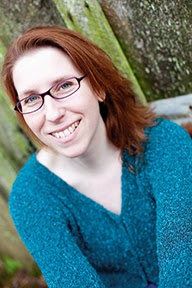 Janice Hardy is the award-winning author of the teen fantasy trilogy The Healing Wars, including The Shifter, Blue Fire, and Darkfall from Balzer+Bray/Harper Collins. The Shifter, was chosen for the 2014 list of "Ten Books All Young Georgians Should Read" from the Georgia Center for the Book.
 She also writes the Grace Harper urban fantasy series for adults under the name, J.T. Hardy.
When she's not writing novels, she's teaching other writers how to improve their craft. She's the founder of Fiction University and has written multiple books on writing.

This is my problem! Too many conflicts and I don't know which is most important...seems like the biggest gets solved early on. Back to revisions - thanks for this!
ReplyDeleteHello! Kristin Nelson posted your query letter on her blog, and it piqued my curiosity so much that I decided to hunt down your blog! :) And also wait anxiously for the release of your book this fall!
ReplyDeleteI didn't see an email address anywhere, but I am wondering if I can feature you on my blog (interview, guest post) when it is closer to your release date?
Thank you! And congratulations on being published :D
cecilia
P.S. I wish they had kept the original title - it certainly would have caught my eye!
Hi Janice! So how did you come up with your book's conflict? I'm just wondering how a book that sounds so layered and fresh was born (can't wait for the release!).
ReplyDeleteHello everyone, thanks for stopping by! (And for all the nice comments). Anon, that's a great topic for a post, so I'll talk about that tomorrow! (which is probably today now)
ReplyDeleteWhere have you been my whole life? I've always been a writer, in my heart at least. I've always known that I have books in me, but fell into that trap of, only a few ever really make it, and can I really make a living this way, early on and it's made me waste about 16 years of my life not writing. Well now I'm ready and yours is the first advice that actually got me off my non-writing butt and back on the keyboard, beginning with this comment. Thanks in advance for being there with me through this process. I can not believe you don't have thousands of followers.
ReplyDeleteAw, thanks! I'm glad I was able to get those fingers to the keys. Good luck on your writing.
ReplyDeleteI'm giving my manuscript one final pass before sending it to my editor. I've had readers request another Blackthorne, Inc. book, so my planning right now is "whose book will it be?"
ReplyDeleteAt a recent Mystery Writers University seminar, Jess Lourey gave us her 7 steps to planning a novel. I found them intriguing, although I'm not sure I could follow all of them. They're very much like yours.
(If anyone's interested, the recap I did of her session is here: http://terryodell.com/terrysplace/?p=1005
Thanks Janice! I'm actually working on a couple loglines and this is great to help me pare down to the essentials. :)
ReplyDeleteThanks for breaking down something as complex as novel planning into a bite sized chunk. This goes in my favorites.
ReplyDeleteI'm a pantser who writes anything from 5 pages to 50 before determining whether I have an actual plot. I think I need to use this formula...Thank you!!
ReplyDeleteTerry, good luck on the last pass and the new book :) Nice that you have a jumping off point for it. Thanks for the link. Interesting steps and not too far from what I do. The setting one I'd probably skip, though I do a lot of world building, so maybe I just do it in a different way.
ReplyDeleteAmelia, oh good! Hope you nail it.
Eva, most welcome. Bite sizes have always made it easier for me to do anything. I can't be the only one!
Rachel6, you're welcome. 50 pages? Wow. I know some great pantser writers, but I don't know how you guys do it. :)
Hi Janice:
ReplyDeleteEvery one of your posts are laid out in such a way that it's easy to understand and follow. Now to implement them. :)
Tracy, thanks so much. :) Sometimes they're my own templates with extra notes on them to flesh them into a post. Maybe that's why? I DO actually use them.
ReplyDeleteHi! Im new to your site and just have to say I'm in love with it! Also was wanting to know if it is easier to dictate a novel instead of actually typing or writing one out? Has anyone had any success with dictating? I have just bout the new dragon program and I am wanting to use it for that purpose. Thanks in advance:-)!
ReplyDeleteMisty, welcome to the blog! Good to have you :) I've never dictated a novel before, but I have heard folks who do it and love it. That's a good topic for a post though. I'll have to see if I can find anyone who's doing this.
ReplyDeleteThanks for the welcome,and I look forward to that topic. Typing is not a strong suit for me so I was hoping dictating would be a better route for me.
ReplyDeleteMisty, it's probably will. Do they have anything where it types out what you say? Kinda like the iphones and Suri? Speech to text, that's it! Something like that might be useful.
ReplyDeleteYes I just bought the program Dragon that types speech to text.I'm looking forward to using it for my novel writing as soon as Im done with the tutorials. You have to train the program to your voice recognition and dialect. Its very easy and simple to use.
ReplyDeleteCould you keep me posted on the topic if you decide to do a blog on it? Thanks :-)
ReplyDeleteMisty, will do. I may have just found someone to do a post, and they use Dragon as well.
ReplyDeleteAwesome:-) Thanks you!
ReplyDeleteNicole, awesome! I'm so happy for you and glad I was able to help :) Good luck!
ReplyDeleteGod Bless you, Janice Hardy. This post may be a couple of years old, but it's new to me and saved my novel and the day. Thank you!
ReplyDeleteMost welcome! Glad you found it useful ;)
DeleteI wanted to thank you. I had a BEAUTIFUL world that was calling my name, characters were only whispering. They wouldn't tell me about themselves or their concerns. Until this. Thank you so much.
ReplyDeleteMost welcome! I'm glad it helped you find your story :)
Delete